In the world of dietary supplements and herbal products, new, unregulated products emerge on the market every day, making it difficult to keep up with what’s safe and effective and what’s potentially harmful. One substance gaining attention for its addictive properties is 7-hydroxymitraginine or 7-OH.
In this article, we’ll discuss what 7-OH is, where it comes from, why it’s getting attention, and what risks are involved. Most importantly, we’ll talk about the signs of 7-OH addiction and how to find help.
What is 7-OH?
7-hydroxymitragynine, often shortened to “7-OH,” is a substance that comes from the kratom plant. Kratom is a tropical plant that has been used in some parts of the world for its stimulant and pain-relieving effects. While kratom itself has gained attention in recent years, 7-OH is a more concentrated and powerful compound found within it.
Like kratom, 7-OH acts on the same receptors as opioids, which means it can produce similar effects.[1] Common side effects include:
- Pain relief
- Drowsiness
- Sedation
- Nausea or vomiting
- Constipation
- Dizziness
- Dry mouth
- Loss of appetite
- Respiratory depression (slowed breathing)
- Confusion
- Mental fog
At lower doses, people typically report feeling relaxed, calm, and less sensitive to pain. But at higher doses, kratom and 7-OH act similarly to opioids, causing sedation, slowed breathing, and confusion or dizziness.
Because it acts similarly to opioids, it carries many of the same risks, including physical dependence and withdrawal.
How Does 7-OH Compare to Kratom? Potency and Risks
It can be easy to confuse 7-OH and kratom, especially since 7-OH is a compound found in kratom itself. When comparing 7-OH and kratom, the main difference is in the potency.
Kratom, in its natural form, contains a mix of compounds that can have stimulant or calming effects depending on the dose. 7-OH is one of those compounds; however, it is one of the more potent ones. This also makes it more addictive.
7-OH is only found in trace amounts in the kratom plant. But when isolated and concentrated, it can produce powerful effects that are far stronger than the kratom plant itself can produce.
There is also a difference in how these products are made and sold. Traditional kratom products are typically sold as ground leaves or powders. 7-OH may be sold as concentrated powders, pills, chewable tablets, or other forms.
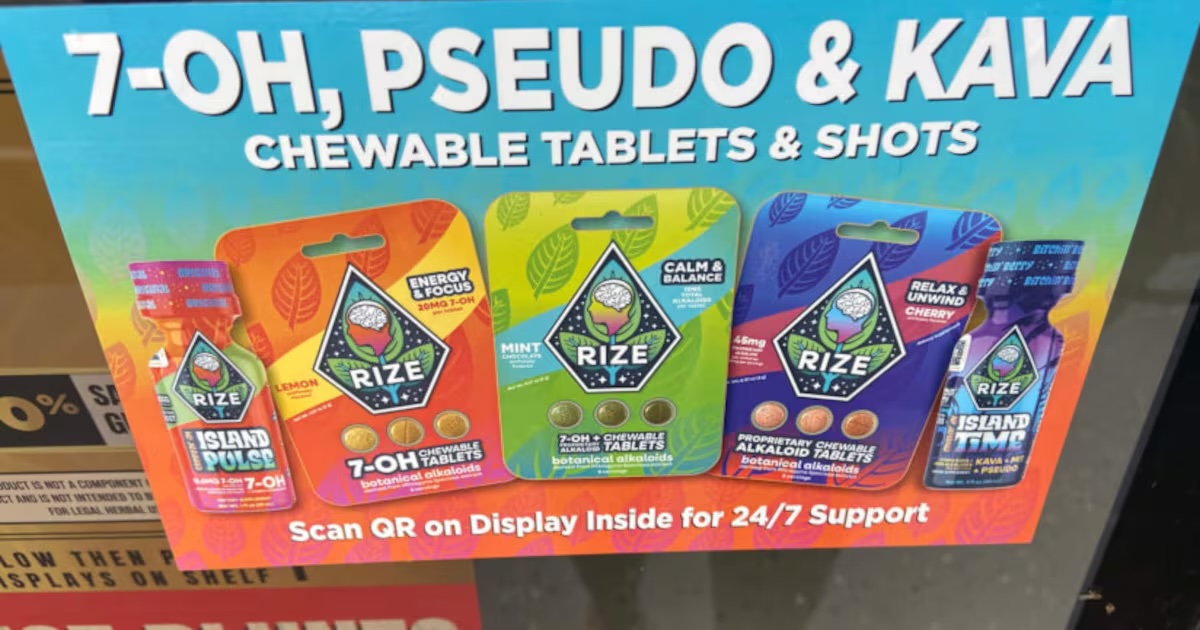 7-OH Products Sold As Supplements, Often Mislabeled As Kava
7-OH is easy to find, and it is legal in many states. However, it is not always sold on its own, and products are not always clearly labeled.
7-OH is often added to products that are marketed as “herbal supplements” or “natural remedies.” These products may be sold in places like gas stations, vape shops, or online. In many cases, they are labeled as kratom products, even when they contain higher concentrations of 7-OH than people might expect.
In some areas, including Alabama where kratom has been banned since 2016, these products are often mislabeled as kava.[2, 3] This can be especially misleading, since kava is a different plant with different, often less potent, side effects. Someone purchasing what they believe is a mild, calming product may instead be exposed to a much stronger substance, causing them to experience unwanted and adverse reactions.
Because labeling is not always clear or accurate, many people may not realize they are using 7-OH at all. That lack of awareness, combined with the potential for misuse and dependence, is part of what makes it a growing concern for communities nationwide.
Overdose Risk
Since 7-OH affects the parts of the brain that control breathing, taking too much can slow breathing to a dangerous level. In severe cases, breathing can stop altogether, leading to an overdose.
Signs of an overdose include:
- Slow or shallow breathing
- Difficulty staying awake
- Not responding
- Confusion
- Blue or gray colored lips or fingertips
- Vomiting
- Loss of consciousness
Naloxone can restore breathing in a person experiencing a potential overdose from a 7-OH product. It is safe to use and can be lifesaving in an emergency, even if you’re unsure exactly what a person took.
In addition to administering naloxone, be sure to dial 911 and stay with the person until help arrives.
An overdose on any substance, including 7-OH, must be taken seriously. Fatalities have been linked to concentrated 7-OH products.[4]
Can You Get Addicted to 7-OH?
Yes, it is possible to become physically and mentally dependent on 7-OH. In fact, 7-OH dependence can look a lot like opioid use disorder, leading to compulsive substance misuse and flu-like withdrawal symptoms that appear when trying to detox.
Like opioids, 7-OH affects the same areas of the brain that are involved in reward, habit, and dependence. With repeated use, the body can begin to rely on it, and over time, a person may feel the need to take more to get the same effect or to avoid the development of withdrawal symptoms.
When someone who has been using 7-OH regularly suddenly stops using it, they may experience withdrawal symptoms such as:
- Restlessness or trouble sitting still
- Anxiety or feeling on edge
- Irritability and mood swings
- Muscle aches and body discomfort
- Sweating or chills
- Nausea, vomiting, or stomach cramps
- Trouble sleeping or vivid/unsettling dreams
- Strong cravings
These symptoms can range from mild to severe, depending on how often the person has been using 7-OH and in what amounts. For some, the discomfort can make it hard to get through daily life, which increases the risk of returning to use just to feel “normal” again.
Finding Help
If you or someone you care about may be using 7-OH or other substances, you’re not alone, and support is available. Take the first step by visiting https://apcbham.org/findhelp/ to learn about resources in the area.
References:
- https://www.fda.gov/news-events/press-announcements/fda-takes-steps-restrict-7-oh-opioid-products-threatening-american-consumers
- https://whnt.com/news/kratom-now-illegal-in-alabama-law-enforcement-agencies-putting-out-the-word-to-business-owners-and-citizens/
- https://www.wbrc.com/2026/03/26/alabama-cracking-down-mislabeled-products-containing-kratom-which-is-banned-state/
- http://publichealth.lacounty.gov/phcommon/public/media/mediapubhpdetail.cfm?prid=5139