Across the United States, the drug supply has become increasingly unpredictable. Just ten years ago, illicitly manufactured fentanyl was appearing widely in the drug supply, beginning a new and deadly wave of the ongoing opioid crisis. But now, public health officials, communities, and individuals are facing a range of stronger, even more dangerous substances, ranging from carfentanil to Xylazine and nitazines. It seems as though substances that were once rare are now common, and new compounds are appearing faster than most communities can track.
Now, in 2026, another drug is emerging: medetomidine.
Medetomidine is not a new drug in a medical sense. It has been used for years in veterinary medicine as a sedative and pain-relieving agent for animals.
What is new is that it’s being increasingly found in emergency-based testing and drug seizures, both in Alabama and nationwide, according to the CDC.[1]
What is Medetomidine?
Medetomidine is a powerful sedative medication that was developed for veterinary use. In veterinary settings, it’s used to calm animals, often before anesthesia, and provide pain relief during procedures.
Medetomidine is not approved for use in humans, though in recent months, it has been increasingly identified in the drug supply in Alabama and across the United States. The drug is typically found mixed with opioids like fentanyl.[1]
Medetomidine belongs to the same drug class as Xylazine, which is another veterinary sedative medication that has already spread widely across illicit drug markets in the U.S. Like Xylazine, medetomidine slows activity in the central nervous system, resulting in:
- Reduced brain activity
- Slowed heart rate
- Low blood pressure
- Deep sedation
Medetomidine is about 100-200 times more potent than Xylazine.[2] As a result, these effects can be strong and long-lasting, especially when combined with other substances.
The Implications of Medetomidine in The U.S. Drug Supply
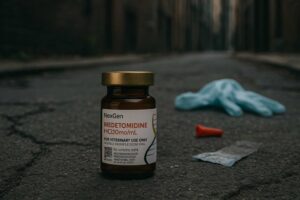
Unlike medications used in medical settings, the medetomidine found in the illicit drug supply is not pharmaceutical-grade and is likely produced in unregulated laboratories. This makes its strength, purity, and effects of it highly unpredictable, increasing the risk of overdose and other serious health complications.
This has several key implications; for example, there is no quality control, so potency can vary widely. The substance may also be combined with other drugs in ways that are unpredictable, leading to people being unaware of exactly what substance(s) they are consuming.
People exposed to medetomidine may experience deep sedation that can last longer than expected, along with a significantly slowed heart rate and low blood pressure. These effects can overlap with those of opioid drugs, which also suppress breathing, leading to a severe and potentially fatal overdose.
Symptoms of Overdose
A medetomidine overdose can look like a fentanyl or opioid overdose, especially because the drug is often found in combination with these types of substances. In many cases, there is no way to tell what substances are involved based on appearance alone.
Symptoms of a medetomidine overdose may include:
- Slow or stopped breathing
- Unresponsiveness or inability to wake the person
- Extremely slow heart rate
- Low blood pressure
- Pale, blue, or gray-colored lips and/or fingernails
- Pinpoint pupils
- Prolonged sedation
- Snoring, gurgling, or choking sounds
These symptoms should always be treated as a medical emergency, even if the exact cause is unclear.
What to Do if Someone is Overdosing
If you suspect an overdose, act immediately. Quick action can save a life. Here’s what to do:
Try Waking The Person
Call their name loudly and try to get a response. If they do not respond, perform a sternal rub by pressing your knuckles firmly into the center of their chest. If they cannot be awakened or are not responding normally, get emergency medical assistance right away.
Call 911
The most important step is to call emergency services as soon as you recognize an overdose. Be sure to give the dispatcher clear information about the person’s condition and location.
Administer Naloxone
Give Naloxone as soon as possible. Naloxone can reverse the effects of opioids like fentanyl and help restore breathing. Because opioids are almost always involved when medetomidine is present, naloxone should always be used.
If there is no response from the individual within 2-3 minutes, give another dose. It is safe to continue administering doses as needed while monitoring their breathing.
It is important to understand that naloxone is an opioid reversal medication that does not reverse the effects of medetomidine, so the person may remain sedated even after breathing improves. There is currently no drug reversal agent for medetomidine.[2]
Place Them In The Recovery Position
If the person is breathing but unresponsive, roll them onto their side. This helps keep the airway open and reduces the risk of choking if they vomit.
Don’t Leave Until Help Arrives
Stay with the person and continue to monitor their breathing and responsiveness. Even if they are a stranger, do not leave them alone, and wait for help to arrive.
If medetomidine or fentanyl is involved, they may remain unconscious and unable to protect their airway, putting them at risk of choking or death without having someone there to help.
The Problem With Medetomidine Withdrawal
Because medetomidine affects the central nervous system in ways similar to other sedatives, repeated exposure may lead to physical dependence. While research in humans is still limited, early reports from clinicians and public health officials suggest that withdrawal from medetomidine may resemble withdrawal from other sedative drugs like xylazine.
Symptoms of medetomidine withdrawal include:[3]
- Anxiety and agitation
- Rapid heart rate
- High blood pressure
- Insomnia
- Tremors
- Severe discomfort
In some cases, withdrawal symptoms may be intense enough to complicate treatment, especially for individuals already experiencing opioid withdrawal at the same time.
Unfortunately, traditional medications used to treat opioid use disorder, like methadone or buprenorphine, do not address withdrawal symptoms caused by sedatives like medetomidine. As a result, people may continue using substances not just to avoid opioid withdrawal, but to prevent the distressing effects of sedative withdrawal as well.
Harm Reduction Is More Important Than Ever
Facing the threat of deadly drugs like Xylazine and medetomidine can be scary, but it underscores the importance of practicing harm reduction. Steps that can help save lives include:
- Carry naloxone and know how to use it
- Never use drugs alone
- Test substances with drug testing kits
- Start with a small amount when using a new or unfamiliar supply
- Stay informed about emerging drug threats in your area
Even though naloxone does not reverse medetomidine itself, it remains one of the most important tools available because opioids are almost always involved. Naloxone can help restore a person’s breathing until help arrives and they can obtain further medical treatment.
Find Support Near You
If you or someone you love needs help navigating substance use, help is available. You can find resources and support tools at https://apcbham.org/findhelp/.
References: