When parents hear about fentanyl overdoses among teenagers, they often think it won’t happen to their child, but the reality is more complicated than that. Many teens who die from fentanyl overdoses are not necessarily seeking out fentanyl or even opioids in the first place. Fentanyl can be present in counterfeit pills and other illicit drugs, creating a risk for young people who may believe they are experimenting with something entirely different.
There are many risk factors for an overdose, and according to CDC data, cannabis use may be one of them. The CDC reports that cannabis is frequently detected in adolescent overdose deaths. That does not mean marijuana is causing fentanyl overdoses or that cannabis is routinely contaminated with fentanyl. Instead, cannabis use may be an important indicator that a teen is participating in social settings or other environments where exposure to counterfeit pills and fentanyl is possible.
CDC Data Suggests Cannabis Use is a Risk Factor in Fentanyl Overdose Deaths Among Teens 
According to CDC data examining overdose deaths from January 2021 through June 2025 across 31 states and the District of Columbia, cannabis was detected in 21% of overdose deaths overall.[1]
However, the percentage was much higher among adolescents. Among young people ages 12 to 17 who died from an overdose, cannabis was detected in 42.7% of cases. During January through June 2025, that number reached 44.6%.
This doesn’t mean that cannabis caused an overdose, nor does it mean that cannabis is being laced with fentanyl. But what it does mean is that teens who are using cannabis may have greater exposure to peers, environments, or sources where other substances, including counterfeit pills and other substances that may contain fentanyl, are available.[2]
In other words, cannabis use may be less important as a direct cause of overdose and more important as a warning sign of broader substance use and experimentation. A teen who uses cannabis will not necessarily go on to use opioids or other drugs, but cannabis use can be an opportunity for parents and other trusted adults to ask important questions about what else that young person is encountering.
Cannabis use may overlap with alcohol use, vaping, experimentation with pills, or social circles where multiple substances are available.
Teen Cannabis Use is Risky, But Fentanyl is the Real Danger
The teenage brain is still developing, and regular or heavy cannabis use has been associated with problems involving memory, attention, learning, and mental health. Starting at a young age can also increase the likelihood of developing cannabis use disorder.
But when we are talking specifically about fatal overdoses among teens, fentanyl is the much more immediate danger.
Illicit fentanyl is frequently pressed into counterfeit pills made to look like legitimate prescription medications, including oxycodone and alprazolam (Xanax). A pill obtained from a friend, acquaintance, dealer, or other illicit source can look nearly identical to a legitimate medication while containing fentanyl instead. Because there is no reliable way to determine what an illicit pill contains simply by looking at it, experimenting with even one counterfeit pill can have fatal consequences.
Parents should not assume fentanyl is only a concern for teens who regularly use opioids or have a substance use disorder. A young person who occasionally experiments with cannabis, alcohol, or other substances may still encounter a counterfeit pill in a social setting and unknowingly be exposed to fentanyl.
Using Cannabis Use as a Starting Point for a Bigger Conversation
If you discover that your teen is using cannabis, it can be tempting to make the entire conversation about marijuana. But teen cannabis use can be a starting point for understanding what else a young person is seeing, hearing about, or being offered.
Have ongoing conversations, asking questions like:
- What are their friends using?
- Are pills being shared at parties or school?
- Are they buying vape cartridges or other products from unregulated sources?
- Have they ever been offered a prescription pill that did not come from a pharmacy?
- Do they understand what fentanyl and counterfeit pills have changed about the risks of experimenting with drugs?
Parents can also use that conversation to establish one particularly important rule: Never take a pill that was not prescribed specifically to you and dispensed by a licensed pharmacy.
Emphasize to them that you can’t tell if a pill is counterfeit by appearance alone, and that an amount of fentanyl smaller than the eye could see could cause an overdose.
The conversation should also include what to do if something goes wrong. Teens should know the signs of a possible opioid overdose, understand that an unresponsive person should never simply be left to “sleep it off,” and know to get help immediately.
Should Parents of Teens Keep Naloxone Available?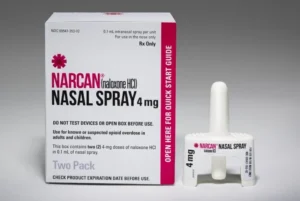
For many families, keeping naloxone at home is a reasonable safety precaution, particularly if a teen uses cannabis or other substances, has friends who use drugs, or could otherwise encounter counterfeit pills in some way.
Naloxone is safe, not addictive, and it doesn’t produce mood-or-mind-altering effects that get you high. It also will not have any effects if given to someone who has not taken opioids, making it a very low-risk medication to have on hand.[3] If someone is overdosing on opioids, having naloxone to administer can save their life.
Parents who decide to keep naloxone in their homes should make sure they know how to use it and that other members of the household, including teens when appropriate, know where it is kept. Naloxone is easy to administer, similar to a nasal spray, so young people can administer it, too, if needed.
Teens should be taught that naloxone is not a substitute for emergency medical care. If someone is unresponsive, breathing very slowly, or not breathing, they should call 911, administer naloxone if available, and follow emergency instructions. Because fentanyl is extremely potent, more than one dose of naloxone may sometimes be necessary to restore breathing until help arrives.
Keeping naloxone available does not mean assuming that your child is using opioids. It is similar to learning CPR or keeping a fire extinguisher in the home: you hope you never need it, but having it available can make an enormous difference during an emergency.
Find Help and Resources Near You
You do not have to wait until substance use becomes a crisis to ask for help. If you are concerned about your teen’s cannabis or other substance use, worried about changes in their behavior, or simply want to better understand the resources available in your community, support is available. Visit https://apcbham.org/findhelp/ to learn more.
References: