Millions of people use prescription medications that are injected with a needle. These medications include insulin for diabetes, hormone therapies, fertility treatments, GLP-1 weight loss drugs, and many others.
Once these medications have been administered, the needle needs to be handled safely, but this is something many people don’t think about until they’ve already administered their medication and are holding a used needle in their hand. Some assume a used needle can simply be tossed into the trash. Others may not realize that pen needles, lancets, and auto-injectors require special handling.
Safe needle disposal is a key part of protecting public health, and that includes when the needles are used for prescription medications at home. Safe needle disposal helps prevent accidental injuries, protects the community’s sanitation workers, and reduces risks for children and pets.
Whether you use injectable medications yourself or know someone who does, it’s important to understand how to dispose of used needles safely.
The Growing Use of Injectable Prescription Medications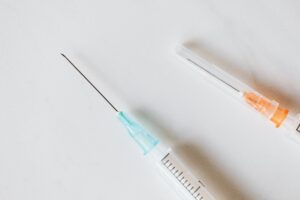
Over the past several years, more people have begun using medications that require injections.
Insulin has been a vital treatment for many people living with diabetes for over a century. People also take injections for hormone therapy, fertility treatments, and more. Even more recently, weekly injectable GLP-1 medications have gained attention as treatment options for diabetes and weight management. Now, overall, an estimated 12-16% of Americans take some type of prescription injectable medication.[1,2]
Because these medications are used regularly, it’s easy to overlook the importance of proper needle disposal.
Why Needle Disposal Matters More Than Many People Realize
Improperly discarded needles can be dangerous. For example, a loose needle placed in a household trash bag can puncture the plastic and injure someone taking out the garbage. A sanitation worker collecting waste may be exposed to a needle that wasn’t properly contained. Curious, unaware children or pets may encounter needles that were left on countertops, in bathroom wastebaskets, or in other easy-to-access locations.
Even recycling facilities can be affected by used, improperly disposed needles. Workers sorting recyclable materials may be injured if needles are mistakenly placed in recycling bins.
Thankfully, these situations are all preventable by disposing of sharps safely.
First, What Exactly Is a “Sharp”?
A “sharp” is a term used for a needle or any sharp edge used to puncture the skin. Many people assume only traditional syringes count as sharps, but several common prescription products are sharps that require safe disposal.
Examples include:
- Insulin syringes
- Insulin pen needles
- GLP-1 medication pen needles
- Auto-injectors
- Pre-filled syringes
- Lancets used for testing blood sugar
- Other prescription injection devices
If an item contains a needle or can puncture skin, it should generally be treated as a sharp and disposed of appropriately.
Safe Ways to Dispose of Needles Used for Prescription Medications
Once a needle has been used, it should be disposed of as soon as possible. Leaving needles on countertops, in bathroom trash cans, or tucked into drawers increases the risk of accidental needle-stick injuries.
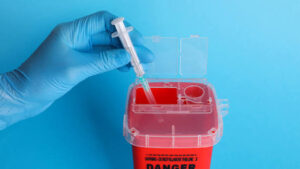 Use a Sharps Disposal Container
The easiest, safest way to dispose of a used needle is by using an FDA-cleared sharps disposal container. These containers are specifically designed to safely hold used needles. They are typically made of durable plastic and have puncture-resistant walls and secure lids.
Sharps containers can be purchased online or at most pharmacies. Some pharmaceutical manufacturers, including Novo Nordisk, allow patients to request free sharps containers.[3]
When disposing of needles in a sharps container, you should:
- Avoid recapping the needle (you could accidentally stick yourself with the needle while trying to put the cap on)
- Place the needle directly into the sharps container
- Close the lid securely after each use
- Keep the container upright
- Store it out of reach of children and pets
Once the container becomes nearly full, follow your local disposal guidelines. Disposal requirements vary by community. Some areas allow properly sealed sharps containers to be placed in household trash, while others require drop-off programs or other disposal methods. In Alabama, sharps containers can be sealed and disposed of in the garbage.
The Alabama Department of Environmental Management (ADEM) recommends individuals fill their full sharps containers with one part bleach solution and ten parts water, letting the solution soak for 20 minutes to sterilize the sharps, then emptying the solution into the sink before re-sealing the sharps container and placing it in the garbage. They also suggest sealing the cap of the container with heavy-duty duct tape.[4]
Making Your Own Sharps Container
If you don’t have a sharps container and need to dispose of your sharps at home, it is fairly easy to make one using a heavy-duty plastic container, such as those used for laundry detergent.
The container should be thick enough that it is puncture-resistant, have a tight-fitting lid, be able to sit upright, and be leak-resistant. Avoid using glass containers, aluminum cans, thin plastic bottles, plastic bags, or cardboard containers, as these can all be easily broken or punctured.
Clearly label the container “Sharps,” and “Do Not Recycle,” then check your local disposal requirements before placing the sealed container in a trash can for disposal.
Take Advantage of Local Disposal Programs
Many communities offer convenient options for disposing of used needles and sharps. These programs help ensure that needles are handled safely and reduce the risk of accidental needle-stick injuries.
Depending on where you live, your disposal options may include:
- Sharps drop boxes or kiosks
- Pharmacy collection programs
- Hospital or healthcare facility collection sites
- Hazardous waste collection events
- Mail-back sharps disposal programs
If you are unsure what options are available in your area, you can contact your local health department or pharmacist to see what your options are.
Common Needle Disposal Mistakes to Avoid
Just as important as knowing how to dispose of needles is knowing what practices to avoid.
Used needles should never be:
- Thrown into household trash bins
- Placed in recycling bins
- Flushed down toilets
- Washed down drains
- Left in public spaces
- Left on the counter
Tips for Keeping Your Household Safe
Whether you use injectable medications daily or occasionally, a few simple habits can help prevent injuries. These include:
- Store supplies securely – Keep medications, needles, and disposal containers in a secure location that children and pets cannot access.
- Dispose of used sharps immediately – Don’t leave used needles on counters, tables, or bedside stands. Place them in a sharps container right away.
- Replace sharps containers before they overflow – Overfilled containers increase the risk of accidental injuries. Replace containers before they become completely full.
- Educate family members – Ensure everyone in the household understands that used needles should never be handled casually or thrown into regular recycling.
Taking a few extra seconds to dispose of needles properly helps protect your family, sanitation workers, and pets.
Learn More About Safe Medication Disposal
To find more information about safely disposing of prescription medications and medication take-back resources, visit https://apcbham.org/safe-medication-disposal/.
References: